
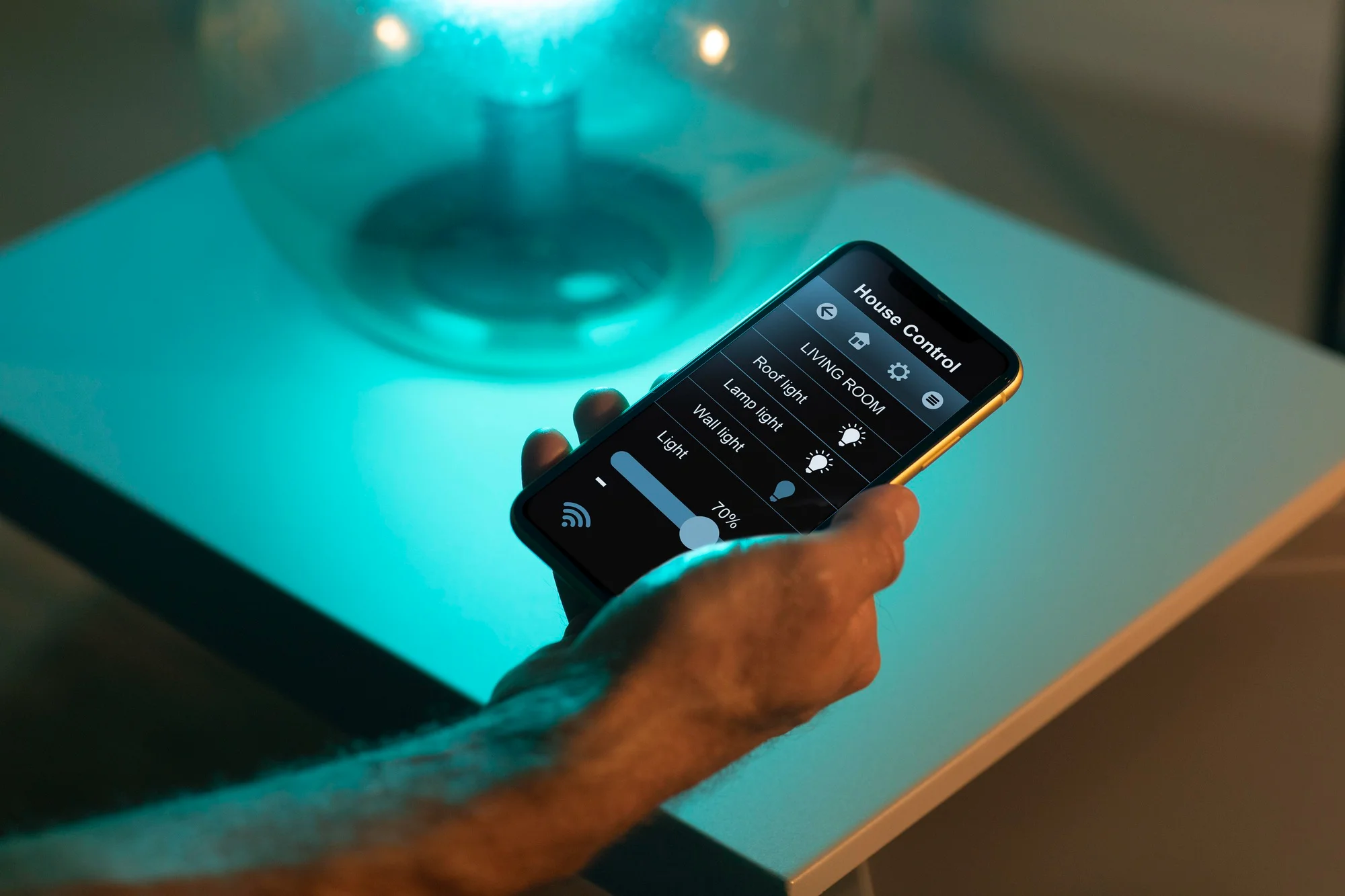
How to Keep Your Smart Home Smart When ECG Goes AWOL
If you live in Ghana, you already know the drill. You’re in the middle of something important, cooking, watching a match, or about to hop on a Zoom call, and poof. The lights go out. ECG has left the chat.
“Dumsor” isn’t just an inconvenience anymore. For the growing number of Ghanaian homeowners who’ve invested in smart home technology, a power outage raises a real question: does my smart home still work when there’s no power?
The short answer? More of it works than you’d think. And with a little planning, you can build a smart home that barely flinches when ECG decides to take a break.
Here’s how.
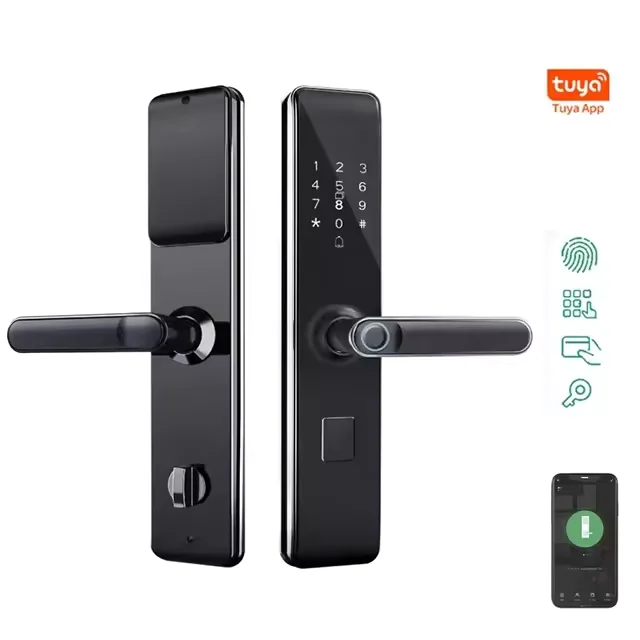
1. Your Smart Door Lock Doesn’t Care About ECG
Let’s start with the good news. Smart door locks run on batteries, AA or lithium depending on the model, and they have absolutely nothing to do with your mains electricity. When the power goes out, your smart lock keeps working like nothing happened.
Most smart locks will run for 6 to 12 months on a single set of batteries. That’s hundreds of “dumsor” episodes without breaking a sweat. Your fingerprint still unlocks the door. Your PIN code still works. The auto-lock feature still kicks in when you forget.
The only thing you’ll lose during a power cut is remote access via WiFi (since your router goes down too, more on that later). But the lock itself? Rock solid.
What we carry at SmartHome Ghana:
Our Tuya Smart Fingerprint Door Lock with Keypad (₵1,500) runs on 4 AA batteries and lasts up to 12 months. The Automatic 3D Face Recognition Smart Door Lock (₵5,000) uses a built-in rechargeable battery with emergency USB-C charging, so even if the battery dies, you can plug in a power bank for 30 seconds and get in. The 3D Face Recognition Smart Lock (₵3,000) and the SmartGuard Elite for Frameless Glass Doors (₵1,400) are both battery-powered and dumsor-proof.
Pro Tip: Keep a small power bank near your front door. If your lock’s battery ever dies unexpectedly, a quick USB boost gets you in immediately.
2. Go Solar With Your Security Cameras
Here’s where it gets interesting. Traditional CCTV systems go completely blind during a power outage. That’s exactly when you need them most, and exactly when they fail you.
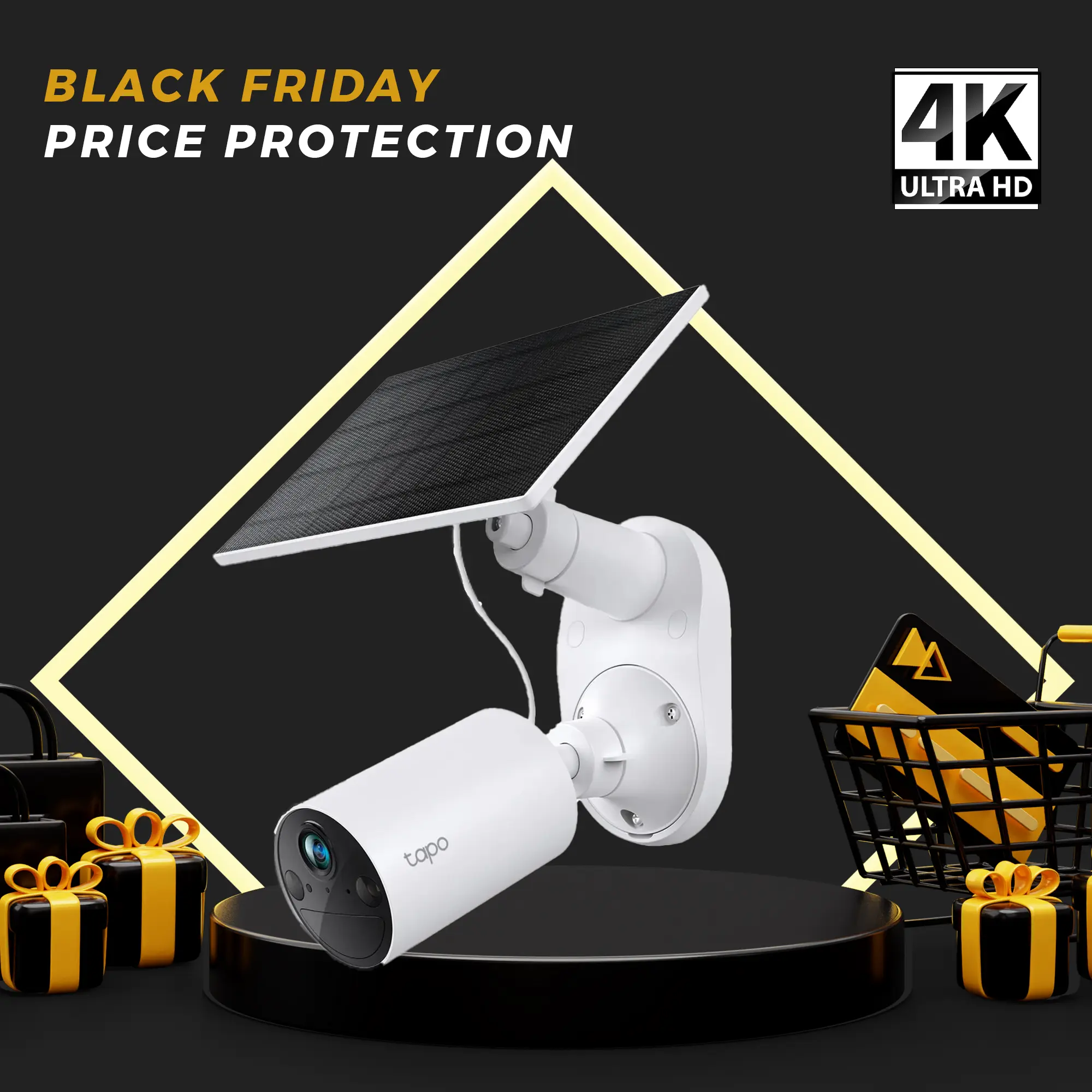
Solar-powered smart cameras change the game entirely. They charge during the day, store power in built-in batteries, and keep recording through the night and through every power cut. Rain or shine, ECG or no ECG, your cameras are watching.
And here’s a stat that should make you think: most break-ins in Ghana happen during power outages, when security systems go dark and streets go quiet. Having cameras that stay on when everything else goes off isn’t just convenient, it’s critical.
What we carry at SmartHome Ghana:
The Tapo C402 Solar Camera Kit (₵1,200) is our top pick for dumsor-proof security. It comes with its own solar panel, records in 1080p, and sends motion alerts straight to your phone, power or no power. The 4G SIM Solar Camera (₵1,200) takes it even further: it runs on mobile data (4G SIM), so it doesn’t even need WiFi. If your router is down and the lights are out, this camera is still recording and sending alerts through MTN, Vodafone, or AirtelTigo.
The Tapo C425 Battery-Powered Camera (₵1,500) doesn’t use solar, but its internal battery lasts for months on a single charge. For indoor use, the Tapo C200 (₵500) and Tapo C210 (₵750) are WiFi-powered, so they’ll go down with the power, but they save footage locally on SD cards, and they’ll pick right back up the moment electricity returns.
Pro Tip: Put solar or battery cameras at your gate and compound perimeter. Keep the cheaper WiFi cameras inside. This way, your exterior security stays active 24/7 regardless of power.
3. The Secret Weapon: Keep Your WiFi Router Alive
Here’s the thing most people don’t realise: your smart home is only as strong as your WiFi connection. When ECG goes AWOL, your router dies, and most of your smart devices lose their connection to the cloud and to your phone.
The fix? A small UPS (Uninterruptible Power Supply) for your router.
A mini UPS, sometimes called a router backup battery, is a small device that sits between your wall socket and your router. When power is on, it charges. When power goes off, it instantly kicks in and keeps your router running for 4 to 8 hours, depending on the model.
This one device changes everything. With your WiFi still running during dumsor:
- Your smart cameras keep streaming to the cloud
- You can still control your smart locks remotely
- Motion alerts still reach your phone
- Your smart plugs remember their schedules
- Your door and window sensors still send notifications
A decent mini UPS costs between ₵150 and ₵400 at most electronics shops in Accra. It’s the single best investment you can make for your smart home’s power resilience.
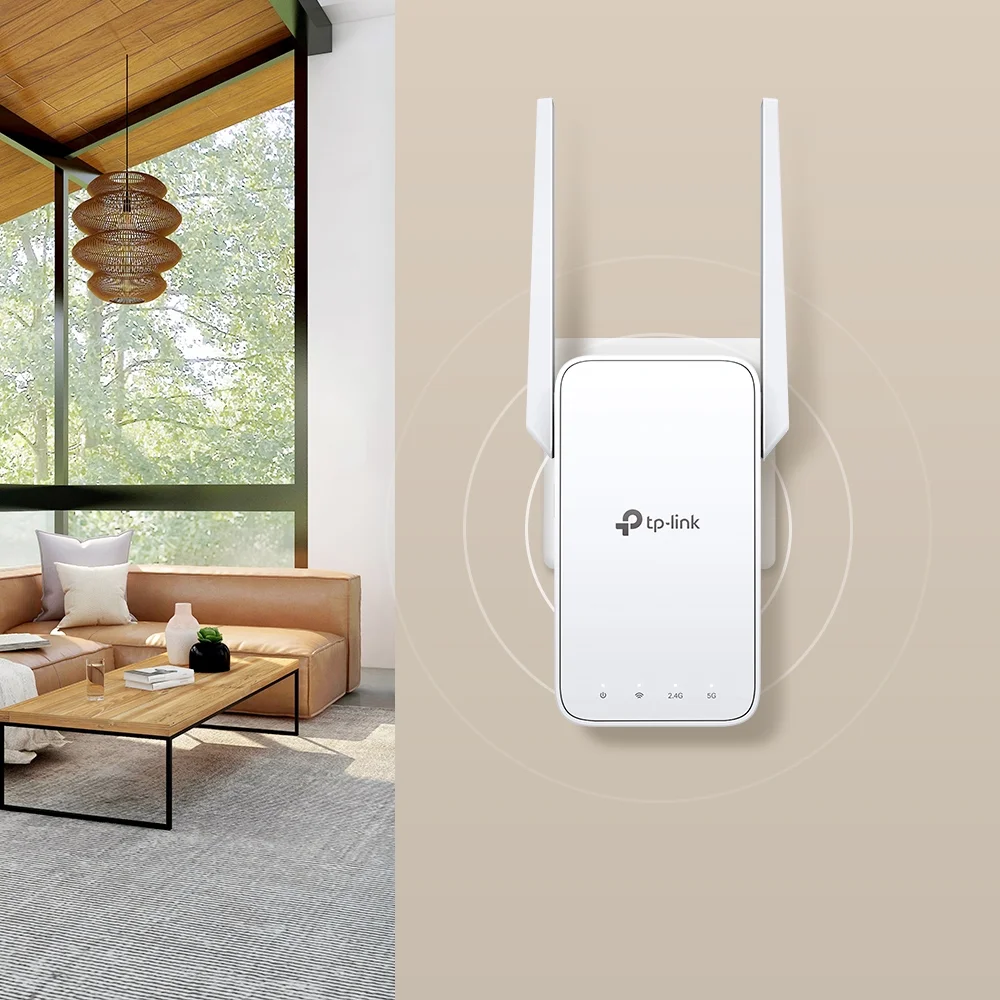
Pro Tip: If you’re using a WiFi extender like our TP-Link AC1200 WiFi Extender (₵700) or AC750 Range Extender (₵500), plug those into the UPS too. No point keeping the router alive if the signal can’t reach your devices.
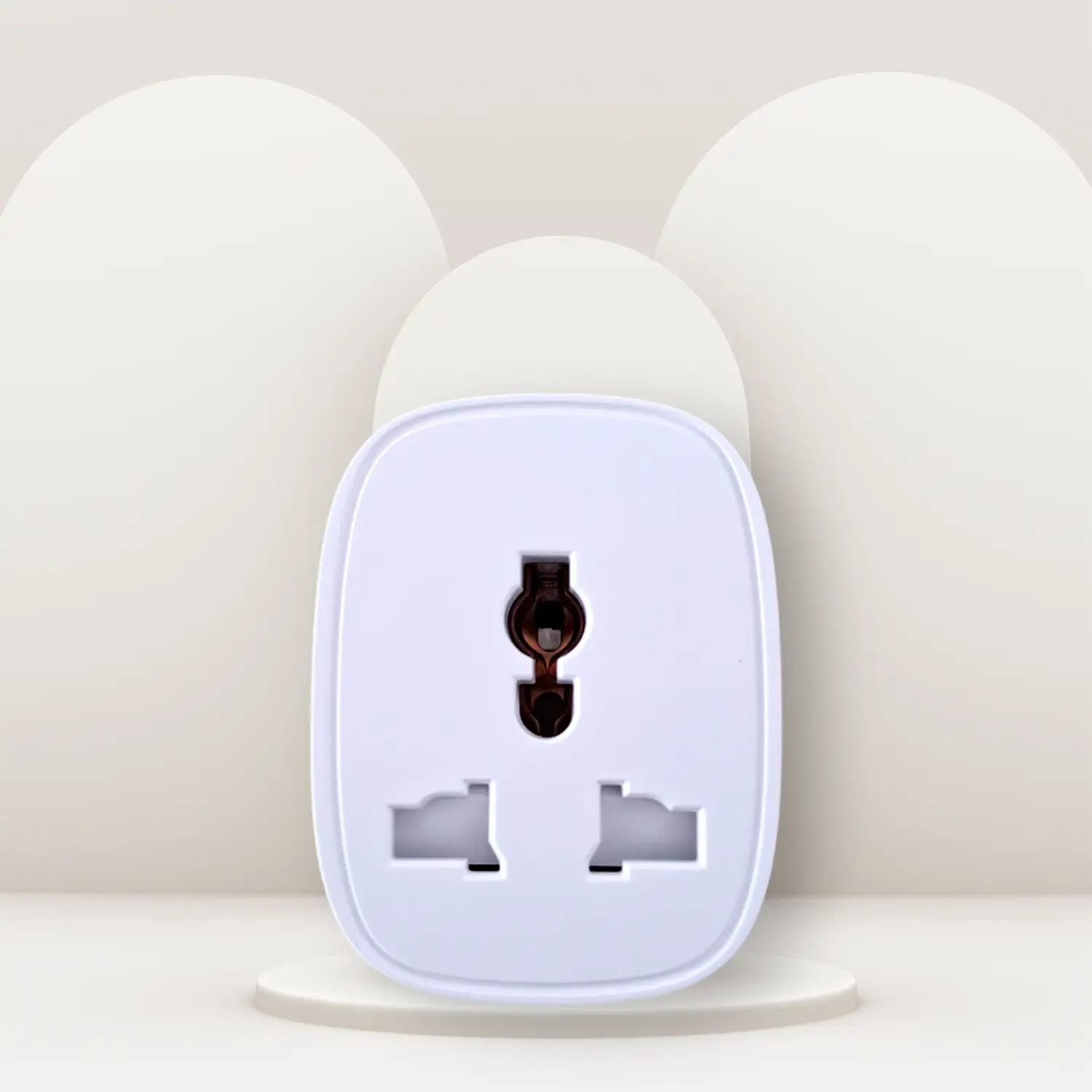
4. Smart Plugs: Your Power Comeback Manager
Let’s talk about what happens when the power comes back. Because honestly, that’s when half the problems start.
You know the feeling. ECG restores power at 2 AM. Your fridge kicks on. Your AC blasts. Your water heater fires up. Your TV, decoder, microwave, everything surges to life at once. That sudden spike can damage electronics, trip your breaker, or worse.
Smart plugs are your power comeback manager. Here’s how:
- Schedule your heavy appliances so they don’t all restart simultaneously. Set your water heater to only run during specific hours, not the moment power returns.
- Use energy monitoring to see exactly which devices are consuming the most power, so you can prioritize what stays on and what waits.
- Set auto-off timers on things like irons and heaters as a safety net, because you might forget they were on when the power cut happened.
What we carry at SmartHome Ghana:
The Tuya Smart WiFi Plug with Energy Monitoring (₵195) is perfect for this. It tracks exactly how much power each device uses, lets you set schedules, and handles up to 16A, enough for most household appliances. At that price, grab a few and put them on your fridge, AC, and water heater.
For a more permanent solution, the Smart Wall Double Sockets with USB and USB-C (₵580) replaces your existing wall sockets with smart ones. Built-in USB charging means your phone charges even without a separate adapter.
Pro Tip: Create a “Power Restored” automation in the Tuya app. When the smart plug detects power, it can wait 5 minutes before turning on your AC, 10 minutes before the heater, staggering the load so nothing trips.
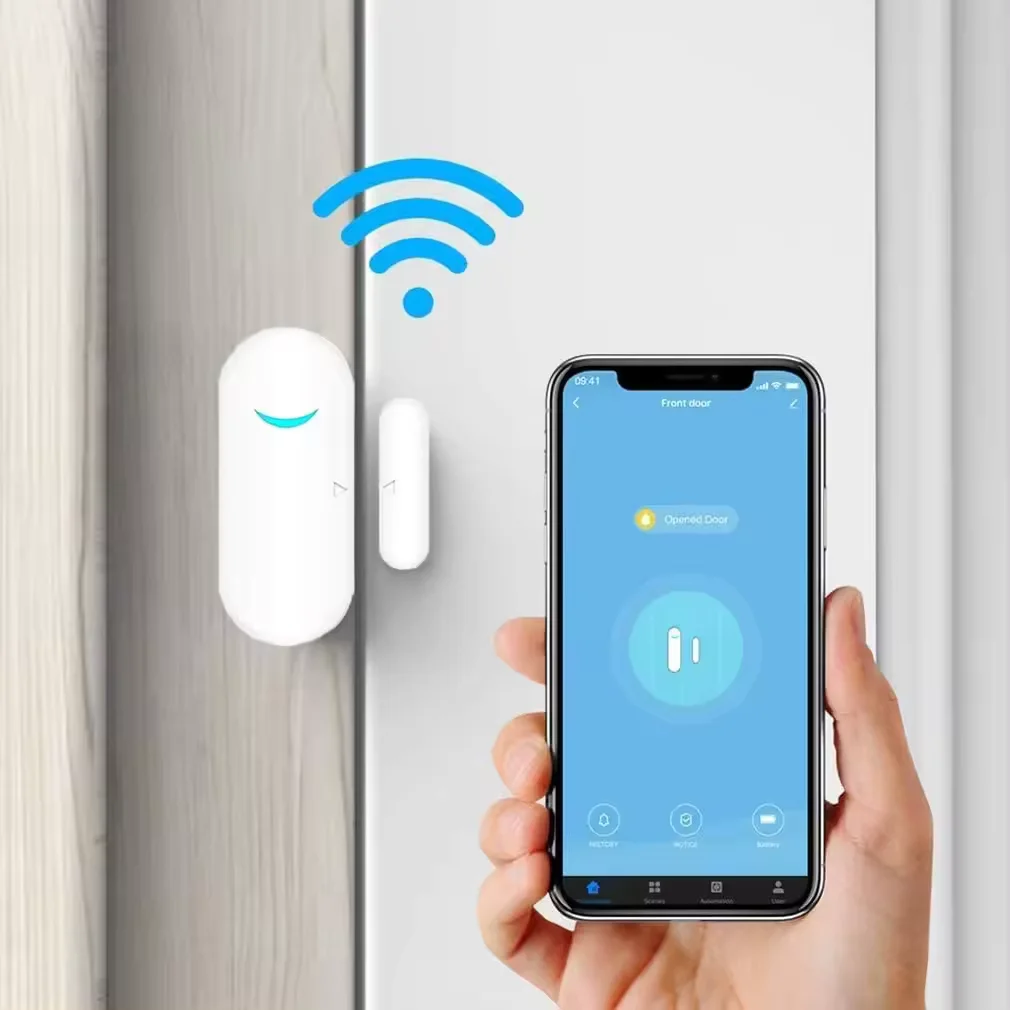
5. Sensors That Never Sleep
Door and window sensors are the unsung heroes of a dumsor-proof smart home. They’re tiny, battery-powered, and completely independent of mains electricity. Whether the power’s been out for 5 minutes or 5 hours, these little devices keep doing their job.
When someone opens your front door, bedroom window, or gate at 3 AM during a blackout, your sensor picks it up. If your WiFi router is still running (hello, mini UPS from Section 3), you’ll get an instant notification on your phone. Even without WiFi, many sensors log events locally and sync when the connection returns.
What we carry at SmartHome Ghana:
The Smart Door and Window Sensor (₵135) is our most affordable security device. Stick it on any door or window, and it sends alerts whenever it opens. Battery lasts about a year. The Door and Window Alarm Sensor (₵230) adds a loud built-in siren on top of the notification, perfect for ground-floor windows or back doors where you want an audible deterrent even if nobody’s checking their phone.
Pro Tip: Put the silent sensor on your main doors (so you get discreet alerts) and the alarm sensor on windows and secondary entrances (so intruders get scared off immediately).
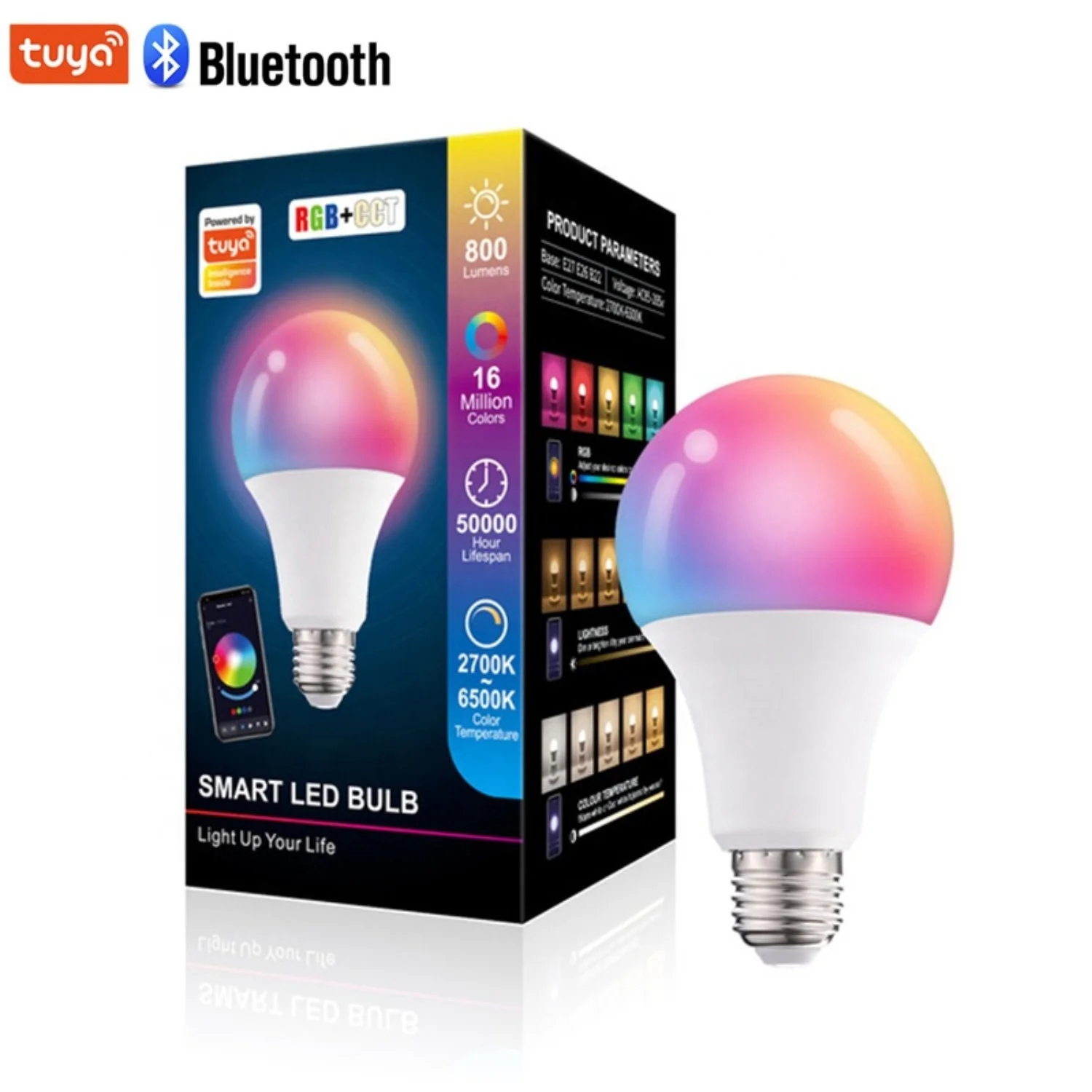
6. Smart Lighting: Prepare for the Dark
Obviously, your smart bulbs won’t work without electricity. But here’s what smart lighting can do for you during dumsor season:
Before the outage: Set up “sunset automations” in the Tuya app so your outdoor lights turn on automatically as it gets dark. If the power’s on, your compound is lit up before you even think about it.
When power returns: Your smart bulbs and switches remember their last state and their schedules. So when ECG comes back at 2 AM, your bedroom light doesn’t suddenly blast on and wake everyone up. Smart bulbs can be set to “power-on state: off” in the app settings, so they stay off until you tell them otherwise.
Energy savings: With ECG billing what it does, every kilowatt matters. Smart LED bulbs use 75% less energy than incandescent bulbs. That means when the power is on, you’re squeezing every pesewa’s worth out of it.
What we carry at SmartHome Ghana:
Start with the Tuya Smart WiFi LED Bulb (₵150), it’s the entry point for smart lighting and lets you set power-on behaviour. Our Smart Switches (₵160 to ₵250 for 2-Gang, 3-Gang, and 4-Gang) work without neutral wire, making them easy to install even in older Ghanaian buildings. And the Smart Sunrise Alarm Clock (₵700) doubles as a gentle light source that you can charge via USB and use as backup lighting during outages.
Pro Tip: Keep one or two rechargeable smart lights in key areas (bedroom, hallway) that you can grab when the power drops. The Smart Sunrise Alarm Clock works great for this.
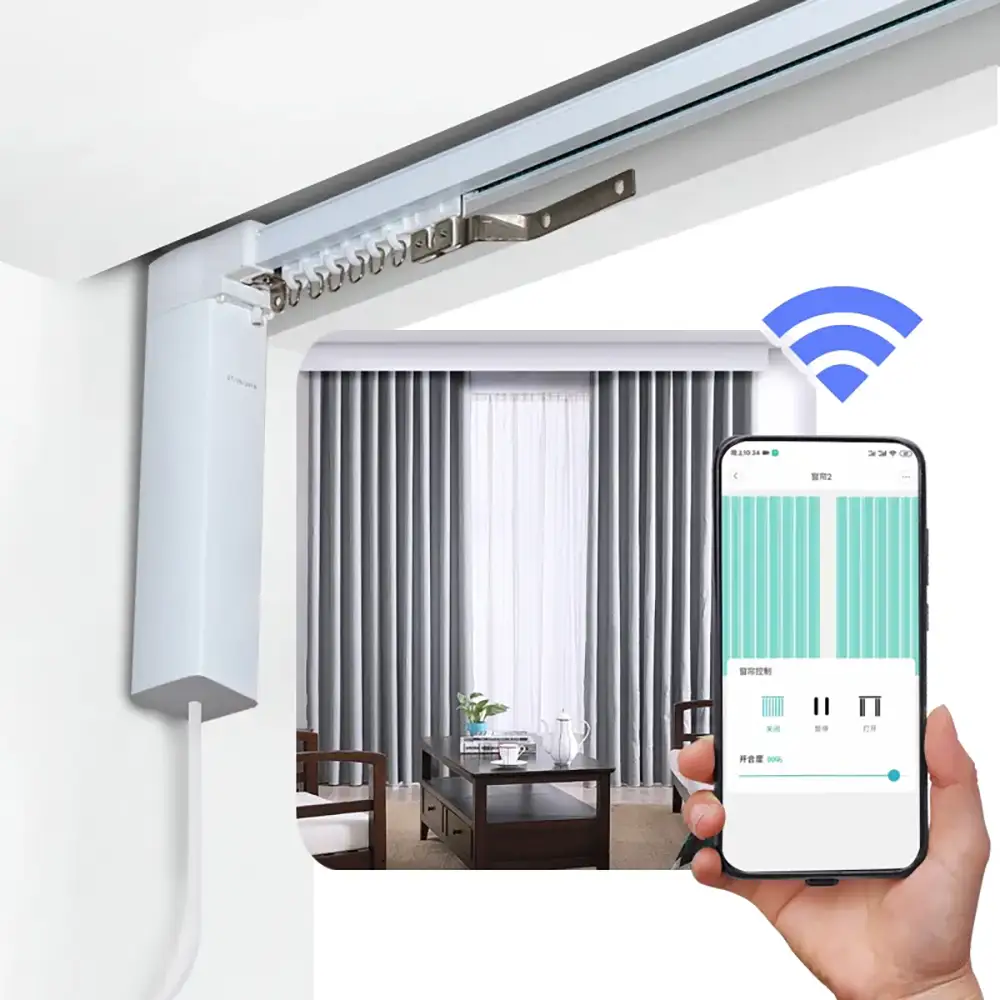
7. Smart Curtains: Set It and Forget It
Smart curtains run on motors that are either plugged in or battery-assisted. During a power outage, the motor won’t operate remotely, but here’s why they still matter:
If you’ve set up daily schedules (open at 6 AM, close at 6 PM), the curtain motor remembers its schedule and executes it when power is available. And because smart curtains reduce heat from direct sunlight, they help keep your rooms cooler naturally, which matters even more when your AC and fans are down during dumsor.
What we carry at SmartHome Ghana:
The WiFi Smart Curtain Motor with 3.5M Rail Track (₵2,000) and the 5M Rail Track version (₵2,500) both support scheduling through the Tuya app. Set them once, and they’ll manage your curtains around your daily routine without you lifting a finger.
Pro Tip: Program your curtains to close by 11 AM during hot season. Blocking the afternoon sun can drop your room temperature by 3 to 5°C, your future self will thank you when the AC is out.
The Dumsor-Proof Smart Home Checklist
Here’s your game plan, broken down by budget:
Essential Kit (under ₵1,000):
- Mini UPS for your WiFi router (₵200-400 from any electronics shop)
- 2x Smart Plugs with energy monitoring (₵390)
- 2x Door/Window Sensors (₵270)
- Total: around ₵700 to ₵1,060
Solid Setup (₵1,000 to ₵3,000):
- Everything above, plus:
- Solar camera for your gate (₵1,200)
- Smart door lock (₵1,500)
- Smart bulbs for 3 rooms (₵450)
- Total: around ₵3,850
Full Fortress (₵3,000+):
- Everything above, plus:
- 4G SIM solar camera for compound (₵1,200)
- Battery-powered outdoor camera (₵1,500)
- Face recognition door lock (₵3,000 to ₵5,000)
- Smart switches throughout the house (₵800 to ₵1,000)
- Smart curtains for bedroom + living room (₵4,000 to ₵5,000)
- Total: around ₵12,000 to ₵15,000
Frequently Asked Questions
Does a smart lock for door work during power outages in Ghana?
Yes — every smart lock for door sold at SmartHome.com.gh runs on built-in batteries (typically 4× AA or a rechargeable lithium pack), not mains electricity. Your smart door lock will continue to unlock via fingerprint, PIN code, RFID card, and mechanical key even during extended ECG outages. The only feature affected is remote app control, which requires your WiFi router to be powered. Battery life typically lasts 6–12 months under normal use, and most locks alert you via the app when batteries are running low.
What smart home devices work without WiFi during dumsor?
Several smart home devices operate independently of WiFi: smart door locks (fingerprint/PIN/key), Zigbee and Bluetooth sensors (door/window alarms with built-in batteries), and solar-powered outdoor security cameras. Smart switches also continue to work as manual wall switches — you just lose the app and voice control until power returns. For a complete buying guide to locks, see Where Can I Buy Smart Door Locks in Accra?
How much does it cost to dumsor-proof a smart home in Ghana?
A basic dumsor-proof setup costs under ₵500: a mini UPS for your WiFi router (₵200–₵300) plus battery-powered door/window sensors (₵80–₵150 each). A mid-range setup that keeps cameras running too costs ₵1,000–₵2,000 with a solar panel kit. The most cost-effective approach is choosing smart devices that already have offline capabilities — like smart plugs that remember their last state after a power cycle and smart locks that run entirely on batteries. Check our budget smart home guide for more cost-saving tips.
Will my smart home automation resume automatically after ECG restores power?
Most Tuya-compatible smart devices — including smart bulbs, smart plugs, and smart switches — are designed to reconnect to WiFi and resume their schedules automatically once power is restored. You do not need to manually reconfigure anything. However, some automations that were scheduled to run during the outage will be skipped. To avoid this, use time-based routines rather than one-off triggers, and keep your router on a UPS so WiFi recovers instantly when ECG comes back.
The Bottom Line
ECG will do what ECG does. We can’t control that. But we can control how our homes handle it.
The beauty of a well-planned smart home is that the most critical systems, your locks, your sensors, your outdoor cameras, keep working no matter what. Add a ₵300 mini UPS for your router, and suddenly 80% of your smart home stays online through any outage.
Dumsor isn’t going away tomorrow. But your smart home doesn’t have to suffer through it.
Ready to dumsor-proof your home? Browse our full range at SmartHome Ghana or send us a message on WhatsApp. We’ll help you pick the right setup for your home and your budget.
SmartHome Ghana. Because your home should be smarter than ECG’s schedule.
Related Guides
- Where Can I Buy Smart Door Locks With Mobile App Control in Accra?
- Real Smart Home Projects in Ghana (With Costs and Savings)
- Smart Homes in Ghana’s Real Estate: The Transformative Power
- Internet Connectivity for Smart Homes in Ghana
- LED Strip Lights Price in Ghana (2026 Guide)
- Smart Switches vs. Regular Switches: How to Save on Your ECG Bill
- How to Install Smart Switches in Your Ghana Home (No Electrician Needed)
- How to Reduce Energy Bills with Smart Home Technology


Add comment